

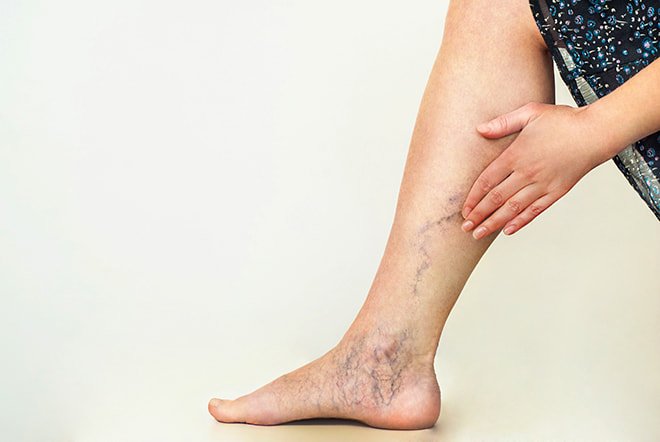
Varicose veins are bulging, enlarged veins that appear close to the skin’s surface, most often in the legs. They develop when weakened or damaged valves allow blood to flow backward and pool in the veins, and certain factors can increase the risk of developing them. Lifestyle choices can affect that risk because some daily habits influence blood flow and pressure in the legs.
Varicose Veins and Weight
Body weight is one risk factor for varicose veins. Being overweight or obese puts added pressure on the veins, and maintaining a healthy weight is among the measures recommended to lower risk. Other factors also affect risk, including family history, age, sex, and pregnancy, so weight alone does not determine whether such veins develop.
Varicose Veins and Movement
Movement supports blood flow through the legs. Muscles in the lower legs act as pumps, and prolonged sitting or standing increases pressure in the veins. When a person remains in one position for long periods, pressure can increase in the leg veins, which is why changing positions regularly is among the recommended measures for reducing risk.
Several daily habits support blood flow. Regular exercise keeps the leg muscles active, and changing positions reduces prolonged periods of sitting or standing. These measures work alongside weight management, while raising the legs when sitting or lying down can also support blood flow.
- Exercise regularly.
- Maintain a healthy weight.
- Change positions frequently when sitting or standing for long periods.
- Raise your legs when sitting or lying down.
Varicose Veins and Risk
Smoking is a risk factor. Pregnancy also increases risk, and multiple pregnancies are listed as another risk factor. During pregnancy, blood volume increases to support the growing baby, which can enlarge the veins in the legs and affect how blood moves through them.
Age and family history also influence risk. Vein valves can weaken over time, and having a family history of varicose veins increases the likelihood of developing them. Sex is another listed factor, while pregnancy can further affect risk, so several factors can contribute to the condition.
Varicose Veins and Diet
Diet is another part of varicose vein prevention. A high-fiber, low-salt diet is among the measures recommended to lower risk, and maintaining a healthy weight is also recommended. These measures can be used alongside exercise and regular position changes, which support blood flow through the legs.
These veins can cause symptoms such as aching, heaviness, burning, cramping, itching, and swelling. Raising the legs can help ease discomfort, and compression stockings can also help manage symptoms. When self-care measures do not improve how the veins look or feel, further evaluation can help determine whether treatment is appropriate.
Make an Appointment
Several measures can help with prevention or manage symptoms. Exercise and maintaining a healthy weight support prevention, while raising the legs and changing positions regularly can support blood flow. Avoiding high heels and tight stockings, other than compression stockings, is also recommended, and compression stockings can help manage comfort. Make an appointment to see a specialist in your area to learn more.