

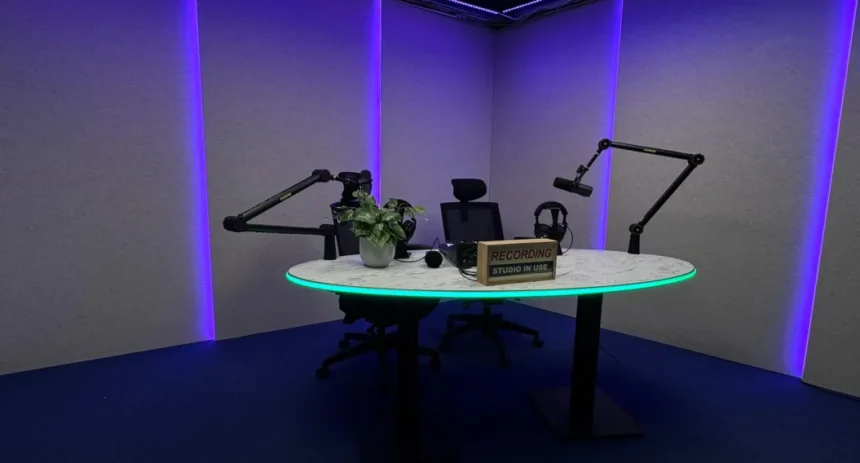
A discussion panel can lose clarity when several speakers share a room with poor acoustics and competing background sounds. Audio reflections, inconsistent microphone placement, and household interruptions affect how each voice sounds in the recording. A podcast studio provides controlled production conditions that address those problems through dedicated equipment and experienced technical support. Here is how studio production changes the panel recording experience:
Coordinate Multi-Camera Coverage
Multiple speakers require more than a single camera angle when reactions and exchanges are part of the discussion. A podcast studio setup supports several cameras, while the technical director decides which view appears at different moments. Speaker framing also remains consistent when the production team controls camera positions and transitions.
Camera switching affects how viewers follow a conversation as speakers respond to one another. Wide shots establish the panel arrangement, while closer framing highlights the speaker or a key reaction. Professional direction connects those views, and the discussion retains visual continuity throughout the recording.
Manage Remote Guests
Remote participation has separate technical requirements when a panel includes contributors outside the recording location. Internet connections, camera quality, microphone performance, and communication delays vary between remote environments. Studio workflows provide a controlled way to integrate contributors with on-site recording. Several production elements support a hybrid discussion:
- Remote connection: Links outside contributors with the studio production.
- Audio routing: Separates incoming and local audio sources.
- Video feeds: Integrates remote cameras with studio footage.
- Technical monitoring: Tracks connection and signal quality.
- Speaker coordination: Keeps remote and local participants synchronized.
Hybrid production also provides flexibility for corporate discussions and interviews involving distributed teams. Remote contributors remain part of the conversation, while the studio manages the technical integration. Compared to traditional in-person meetings, hybrid production lets you include a wider range of voices and perspectives without the limits of physical proximity.
Deliver Broadcast Standards
Professional production combines planning, technical direction, audio engineering, and camera operation throughout a panel recording. Different specialists handle separate production requirements, while coordination keeps those elements working together. Live and recorded formats also require different technical decisions, so the production approach changes according to the intended output.
Control Sound Quality
Room acoustics strongly influence the clarity of several voices in a recorded discussion. Microphones can pick up background noise from appliances and outdoor activity, while hard surfaces cause reflections. A treated recording space minimizes these competing acoustic factors, giving each speaker a more consistent recording environment.
Mic placement matters, especially when more than one person is speaking during a podcast. Monitoring lets the technical team detect unwanted sounds during recordings, and positioning helps identify individual voices. As the discussion progresses, the audio engineer can adjust the gain to ensure quieter speakers don’t get drowned out by louder ones.
A challenge arises when speech overlaps, as multiple voices can be recorded at different levels. Professional monitoring captures these changes as they happen, and technical adjustments keep the session more consistent. The outcome is used for panel discussions, interviews, and recorded podcasts, where the speaker delivers the content.
Record Panels in a Podcast Studio
Panel discussions also benefit from a controlled production environment when the content represents a company, organization, or public-facing brand. Studio planning creates an opportunity to set consistent technical standards before participants arrive, rather than correcting issues afterward. A podcast studio also provides a setting where production specialists coordinate sound, cameras, remote contributors, and staging together. Schedule a studio consultation to discuss the production requirements for your next panel discussion.